
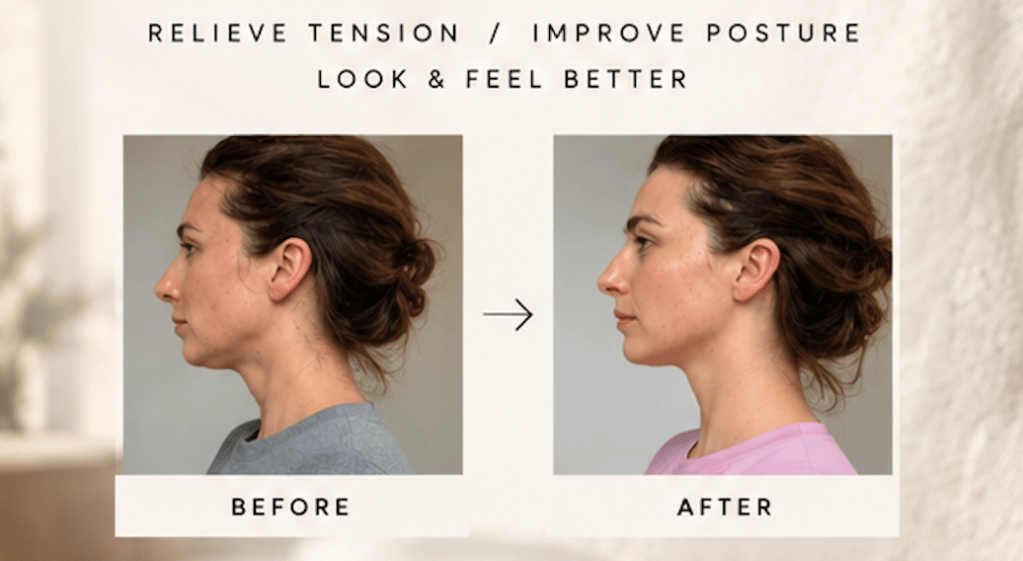
Have you ever finished a day of working at your computer or scrolling on your phone only to notice that your neck feels stiff, your shoulders are tense, or you have a headache you can’t quite explain?
Maybe you’ve tried stretching or adjusting your posture, but you’re still unsure what’s causing the discomfort. You might also have started noticing horizontal lines across your neck and wondered whether the hours spent looking down at your phone are contributing to the changes you’re seeing.
This is where tech neck comes into the conversation.
Tech neck is a common term for neck discomfort associated with prolonged phone, tablet, and computer use. It can involve muscle tension, stiffness, and discomfort from staying in the same position for too long. The term is also commonly used when discussing horizontal neck lines, although these cosmetic changes have several possible causes.
The good news is that there are practical ways to improve neck comfort and support your skin. The first step is understanding what you’re dealing with, because improving neck discomfort and improving the appearance of neck lines require different approaches.
Looking for a Neck Care Solution?
If your main concern is the appearance of your neck, you may be looking for ways to make neck care a more intentional part of your beauty routine.
Alongside moisturizing and daily sun protection, some people explore at-home beauty devices as an additional step in their skincare routine.
VeraLift™ LED Neck Sculptor is one option to explore if you’re interested in a dedicated neck-care device.
Discover VeraLift™ →https://www.tryveralift.com/pages/the-2026-neck-lift-alternative

A beauty device is different from a treatment for neck pain or posture problems. If you’re experiencing stiffness or discomfort, movement, appropriate exercises, and workstation adjustments are more relevant starting points. For cosmetic concerns, the device’s specifications and evidence supporting its intended use are important when deciding whether it’s right for you.
Let’s look at what causes tech neck and what you can do to address it.
What Causes Tech Neck?
Think about how often you look down throughout the day. You might spend hours working at a computer, check your phone between tasks, and relax in the evening with a tablet.
Looking down is a normal movement. The problem is more likely to arise when you remain in the same position for extended periods without enough movement or recovery.
Your neck muscles help support your head throughout the day. Prolonged positions, repetitive activities, and limited movement can contribute to muscle fatigue and discomfort.
Common contributing factors include:
- Prolonged screen use: Spending hours looking at your phone or computer without changing positions.
- Workstation setup: A screen that’s difficult to see or a desk arrangement that encourages you to lean forward.
- Muscle weakness or reduced endurance: Your neck, shoulder, and upper-back muscles may struggle to tolerate prolonged activities comfortably.
- Stress and tension: Stress can influence muscle tension, breathing patterns, and how you experience discomfort.
- Limited movement: Sitting for long periods without regular breaks.
Tech neck isn’t simply about having bad posture. There is no single perfect position you need to maintain all day. Regular movement, a comfortable setup, and gradually building strength are generally more useful than trying to hold yourself rigidly upright.
7 Signs You May Be Experiencing Tech Neck
Tech neck can look different from person to person. These symptoms may be associated with neck strain, but they can also have other causes.
- Neck stiffness: Your neck feels tight after working, studying, or looking at your phone.
- Shoulder tension: You notice tightness around your shoulders or between your shoulder blades.
- Headaches: Neck-related muscle tension can contribute to certain headaches.
- Reduced mobility: Turning your head or looking over your shoulder feels uncomfortable.
- Forward head position: Your head tends to sit in front of your shoulders when you’re using a screen.
- Muscle fatigue: Your neck feels tired after spending a long time at your desk.
- Tingling or discomfort in your arms: Some neck conditions can affect nerves, but these symptoms shouldn’t automatically be attributed to tech neck.
If symptoms persist, worsen, or interfere with your daily life, consult a healthcare professional. Sudden weakness, difficulty walking, or severe symptoms following an injury require prompt medical assessment.
How to Fix Tech Neck: 4 Practical Steps
You don’t necessarily need expensive equipment or a complicated routine to begin improving neck comfort. Start with a few manageable changes and build from there.
1. Try Gentle Neck and Shoulder Exercises
Movement can help relieve stiffness, while strengthening exercises may improve your ability to tolerate everyday activities.
Here are two simple movements to try.
Chin tucks: Sit comfortably and look straight ahead. Gently draw your chin backward, as though creating a small double chin, without tilting your head down. Hold for three to five seconds and repeat five to ten times.
Shoulder blade squeezes: Sit or stand with your shoulders relaxed. Gently draw your shoulder blades toward each other, hold for three to five seconds, and release. Repeat ten times.
These movements should feel comfortable, not painful. Stop if you experience sharp pain, dizziness, tingling, or worsening symptoms. A physiotherapist can help you choose appropriate exercises if you have persistent discomfort or an existing neck condition.
2. Adjust Your Phone and Computer Habits
You don’t have to maintain perfect posture throughout the day. Instead, make your usual activities more comfortable.
Raise your phone closer to eye level when practical, position your monitor so you don’t have to lean forward, and support your arms when working.
Most importantly, change positions regularly. Try standing up, walking around, or gently moving your shoulders every 30 to 60 minutes.
Even a comfortable workstation can become uncomfortable if you remain in the same position for hours. Movement is an important part of the solution.
3. Practice Relaxed Diaphragmatic Breathing
Your diaphragm is the primary muscle responsible for breathing, while muscles around your neck and upper chest can assist. When you’re stressed or breathing rapidly, you may notice your shoulders rising or tension building around your neck.
Gentle diaphragmatic breathing can help you become more aware of your breathing pattern and may promote relaxation.
Try sitting comfortably with one hand on your abdomen. Breathe gently through your nose, allowing your abdomen to expand naturally, then exhale without forcing the air out. Continue for two to five minutes.
You don’t need to take exaggeratedly deep breaths or force every breath into your abdomen. The aim is to breathe comfortably and relax unnecessary tension.
Breathing exercises won’t resolve every neck problem, but they may be a useful addition to a broader routine. If you experience persistent shortness of breath or unexplained dizziness, seek medical advice rather than assuming it’s caused by posture.
4. Build Strength and Take Regular Breaks
Stretching can feel good, but lasting improvement may also require strengthening your neck, shoulders, and upper back.
Exercises such as resistance-band rows and gentle shoulder strengthening can help build endurance, depending on your needs and abilities. Start with manageable movements and gradually increase your activity.
Stress management and adequate recovery also matter. A short walk, a screen break, or a few minutes of relaxed breathing can help you interrupt long periods of sitting and become more aware of tension.
Consistency is more useful than trying to overhaul your entire lifestyle in one day.
Can Tech Neck Cause Neck Wrinkles?
Tech neck is also used to describe horizontal lines across the neck, but these lines aren’t necessarily caused by looking down at your phone.
Repeated neck movements can contribute to the appearance of skin folds, while genetics, aging, sun exposure, and natural changes in skin elasticity also play a role. Some people develop horizontal neck lines even when they have excellent posture.
This distinction matters because improving your posture won’t necessarily remove established wrinkles. Neck discomfort and cosmetic skin changes need to be approached separately.
To support your skin, consider moisturizing your neck and applying broad-spectrum sunscreen to exposed skin. If you’re interested in additional cosmetic care, you may also explore products and devices designed specifically for the neck.
Is VeraLift™ Worth Exploring?
If your primary concern is the appearance of your neck, VeraLift™ LED Neck Sculptor is an option to investigate as part of your at-home beauty routine.
Before purchasing an LED device, check its specifications, intended use, instructions, and the evidence supporting its claims. Different devices use different technologies, so benefits cannot automatically be assumed from the term “LED” alone.
It’s best to view a beauty device as a possible addition to skincare rather than a guaranteed way to eliminate wrinkles, tighten skin, correct posture, or treat neck pain.
If the product aligns with your goals, budget, and expectations, you can learn more about its features here.
Explore VeraLift™ LED Neck Sculptor →https://www.tryveralift.com/pages/the-2026-neck-lift-alternative
How Long Does It Take to Improve Tech Neck?
There isn’t one timeline that applies to everyone.
Some people notice less stiffness after making changes to their daily habits, while others need several weeks of gradual exercise or professional treatment. Progress depends on the cause of the discomfort, your overall health, and the consistency of your approach.
Pay attention to practical improvements. Is turning your head becoming easier? Does your neck feel less stiff after working? Can you get through the day more comfortably?
Cosmetic changes follow a different timeline, and results from skincare products or beauty devices vary. Be cautious of promises that guarantee dramatic changes within a specific number of days or weeks.
If your symptoms aren’t improving, don’t assume you’re doing something wrong. Seek professional guidance to explore other possible causes.
What If Something Still Doesn’t Feel Right?
One of the most frustrating experiences is having symptoms you can’t explain, especially when you’ve already sought medical advice and still don’t feel well.
It’s important to take those concerns seriously without assuming that tech neck explains everything. Headaches, fatigue, dizziness, numbness, and breathing difficulties can have many causes.
If you’re struggling to find answers, keep track of your symptoms, when they occur, and what makes them better or worse. This can help you explain your concerns to a healthcare professional and decide whether further assessment is appropriate.
You don’t need to choose between ignoring how you feel and assuming the worst. You can remain open to different explanations while taking practical steps to support your well-being.
Final Thoughts
If you’ve spent years looking down at your phone or working at a desk, you may feel that neck discomfort is simply something you have to live with. But many posture-related symptoms can improve with appropriate movement, strengthening, and changes to your daily routine.
Start small. Take regular breaks, find a comfortable workstation setup, and gradually build strength. If your symptoms persist or seem unusual, seek professional guidance rather than trying to solve everything yourself.
For cosmetic concerns, a consistent skincare routine and carefully researched beauty options may help you decide how you’d like to care for your neck.
You don’t need to change everything overnight. A few sustainable habits are a good place to begin.
If you found this guide helpful, let me know in the comments. I’d love to share more posts about tech neck, including simple exercises, breathing techniques, and everyday habits that may help you feel more comfortable.


Leave a Reply