
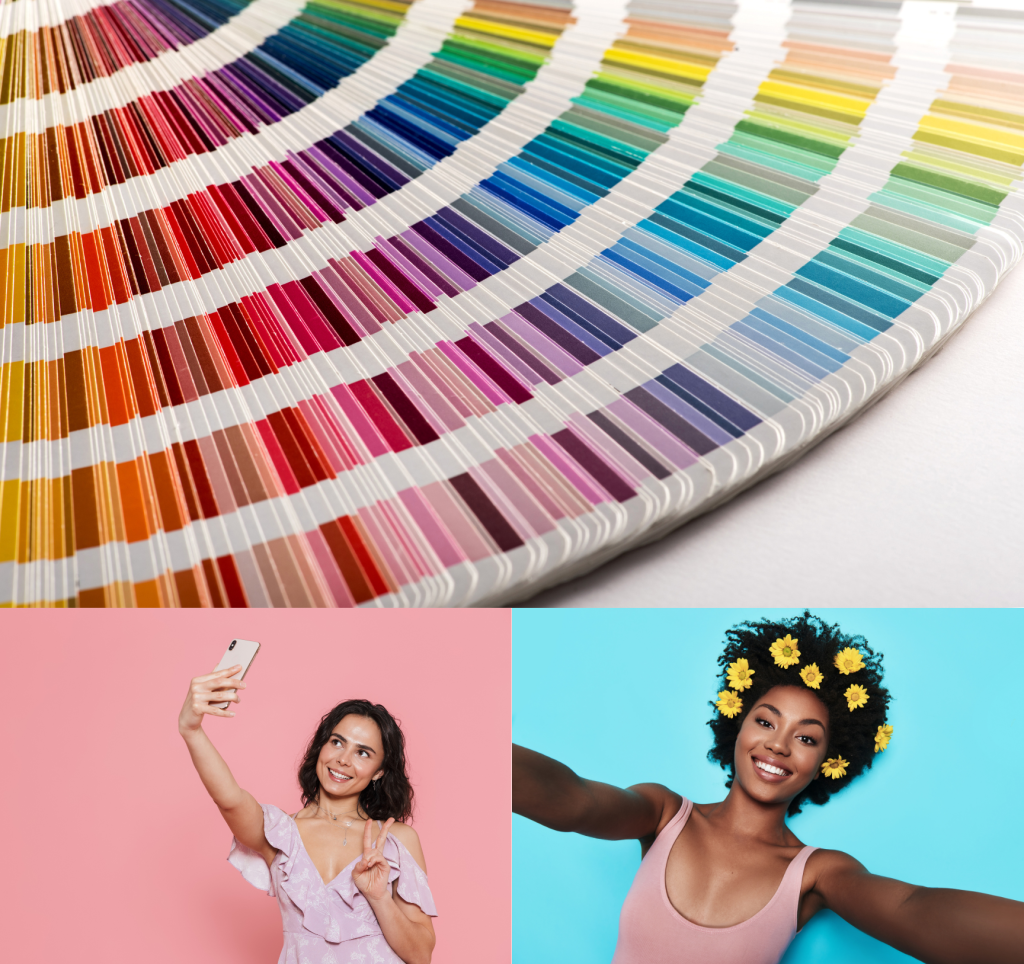
In the realm of fashion and personal style, there’s a phenomenon that has been gaining traction lately – colour analysis. Have you ever noticed how certain shades are just “your colour” and make you glow, while others seem to wash you out? This is where the magic of colour theory comes into play. A colour analysis can help you discover the hues that complement your complexion and enhance your natural beauty effortlessly.
Colour analysis isn’t a new concept; it has roots dating back to the 1980s when it gained widespread popularity. The idea is simple yet profound – understanding how different colours interact with your skin tone can revolutionize your wardrobe choices and personal style. But here’s the catch – traditional colour analysis methods often come with a hefty price tag, and consulting a specialist isn’t always possible.
Enter the era of digital innovation. Recently, people have leveraged the power of technology to conduct a colour analysis using ChatGPT. This groundbreaking approach has opened doors for individuals to uncover their ideal colour palette without breaking the bank or relying on expert guidance.
Understanding Colour Theory:
At its core, colour theory delves into the science and psychology behind how colours interact with each other and with our perception. It explores concepts such as hue, saturation, and brightness, shedding light on the intricate relationships between different shades.
What is Colour Analysis?
Colour analysis is the practical application of colour theory to decide which hues harmonize best with an individual’s skin tone, eye colour, and hair shade. By identifying whether you have warm, cool, or neutral undertones, you can unlock a spectrum of colours that will enhance your features and elevate your style. It’s important for when creating your personal style to know what looks flattering on you.
How Can It Help You?
Discovering your ideal colour palette through colour analysis can revolutionize your approach to fashion and beauty. By wearing shades that complement your complexion, you can create a cohesive wardrobe that exudes confidence and sophistication. At the same time, understanding which colours to avoid can prevent you from looking sad or sick and makes sure that you always look your best.
You don’t need to be a colour theory expert to reap the benefits of a colour analysis. With innovative tools like ChatGPT, anyone can unlock the secrets of their perfect palette. So why wait? Let’s dive into your colour analysis!
DIY Colour Analysis Using ChatGPT
Ready to uncover your perfect palette? Here’s how to do a colour analysis using ChatGPT:
- Take a clear photo in natural lighting capturing your face, hair, and eye colour.
- Edit the photo and find the HEX colour codes for your skin, hair, and eye colours.
- Go to your photo and click on the edit button found in the top right corner. From there look for the marker/pencil symbol and click on it.
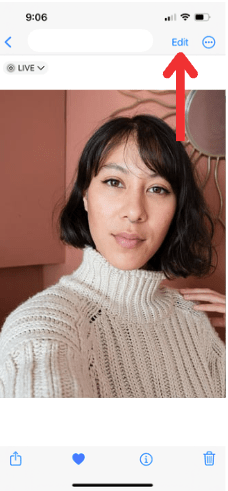
- Go to your photo and click on the edit button found in the top right corner. From there look for the marker/pencil symbol and click on it.
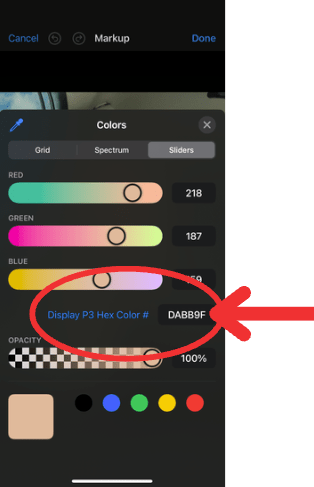
- At the bottom right corner you will find a colour with a rainbow circle around it. Click on it and your colour codes will pop up. Click on the dropper found on the left side.
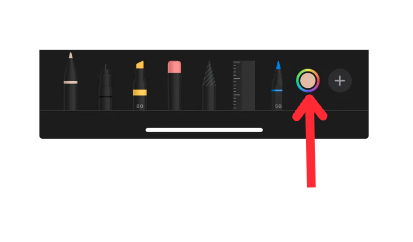
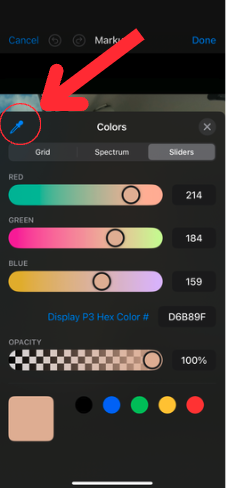
- Once you click on the dropper, hover it over your face on a spot you think is an accurate representation of your skin tone. Meaning avoid the edges of your face with shading. I usually like to go on my cheek or the middle of my forehead.
- Once the dropper selects a colour look for the HEX Colour number or code found at the bottom (EX. DABB9F) screenshot this or write it down.
- Repeat step 2 with your hair and eye colour.
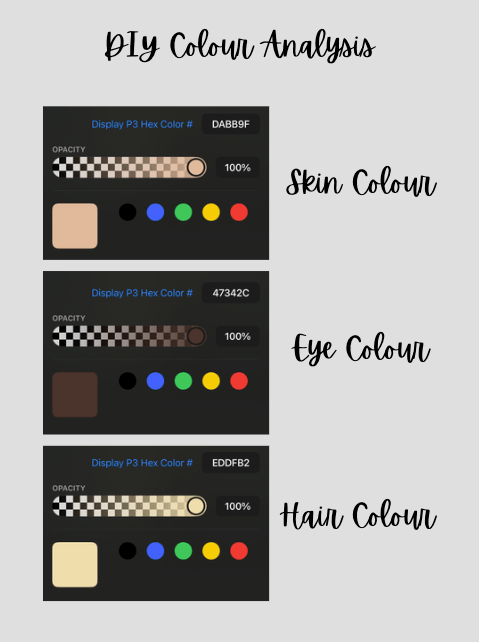
3. Go to ChatGPT and enter the prompt: “I would like a colour analysis. My skin tone is [insert HEX code], my hair colour is [insert HEX code], and my eye colour is [insert HEX code]. Which skin tone colour palette am I? In terms of spring, winter, summer, fall?“
Voila! ChatGPT will generate a personalized colour analysis for you.
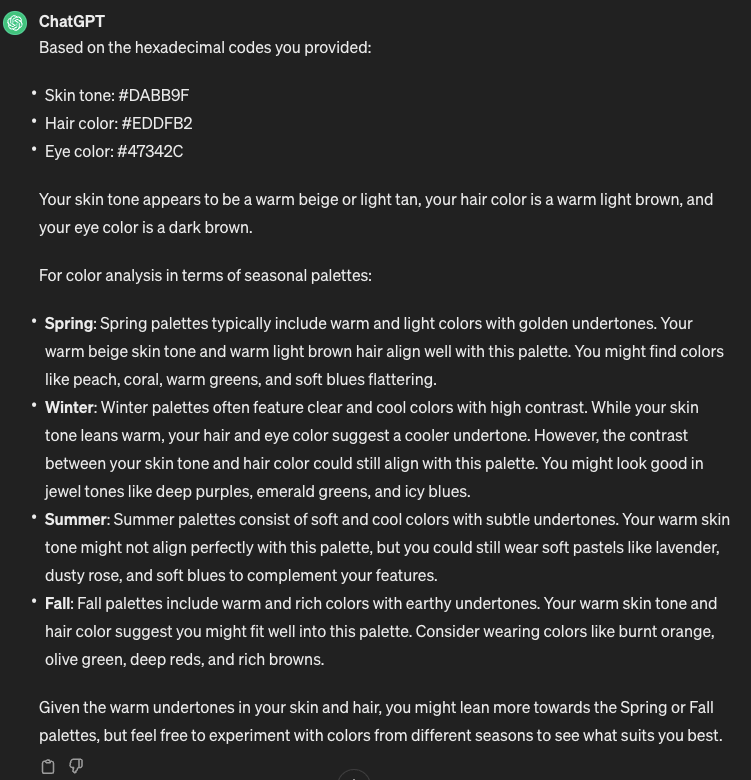
Go Beyond and Play With It
You can also get fancy and ask other prompts:
“What colours look best on me and what colours should I avoid?”
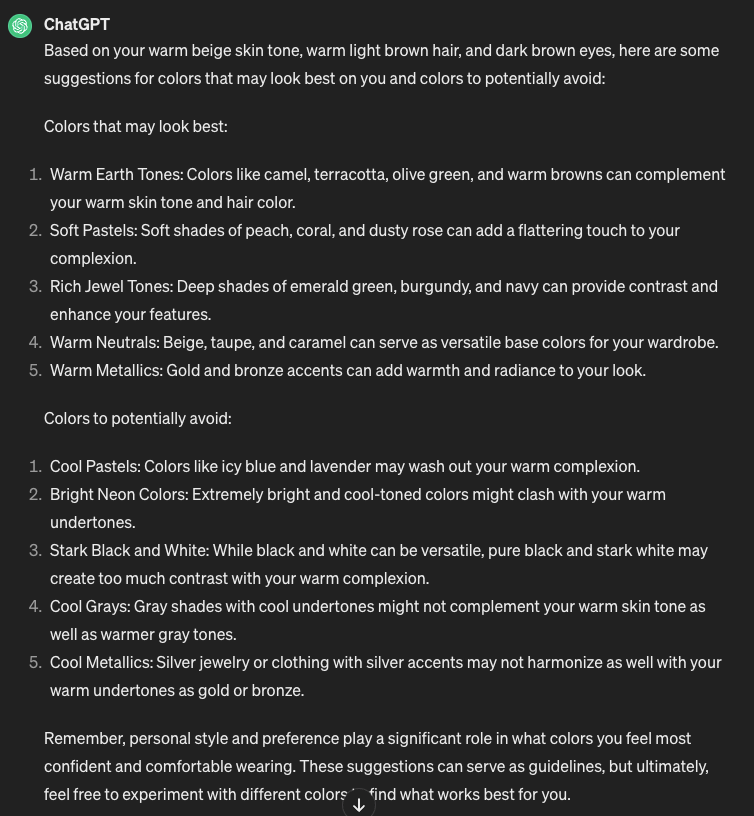
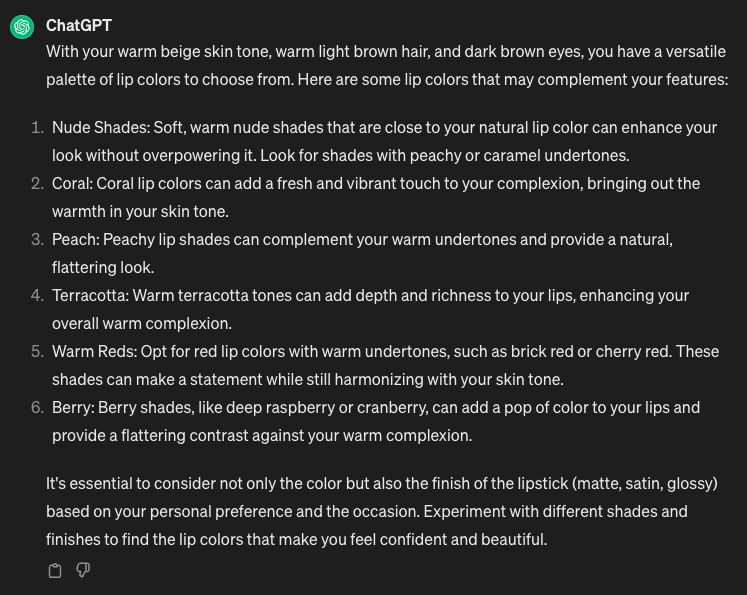
“What lip colours look best on me”
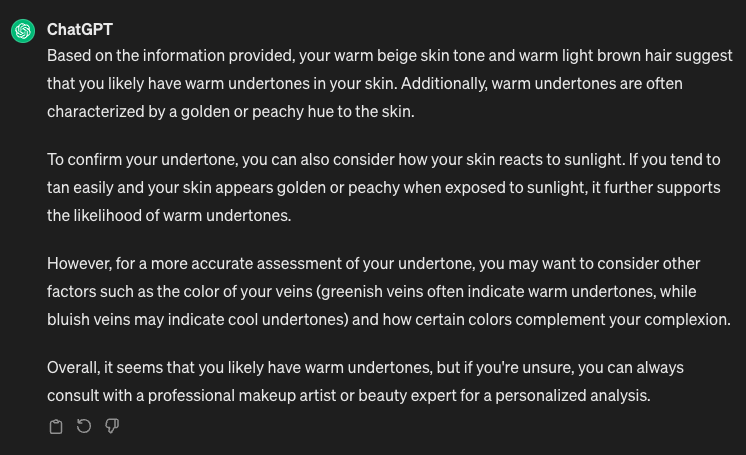
“What skin undertone do I have?” – this is a great way to figure out what undertone you have to pick a foundation shade. For example, you may realize that you have a cool undertone and can select shades with cooler undertones.
Closing Thoughts
ChatGPT only serves as a guide in uncovering the colours that suit you best. While it provides valuable insights, your personal taste and intuition are important. So, if you don’t agree with it’s suggestions, – remember they’re just suggestions! Have fun experimenting and enjoying the process of discovering your unique palette.
I encourage you to try your own colour analysis! I recommend doing the analysis multiple times with different photos as lighting can play a role in your results. Share your results and experiences in the comments section below – I would love to hear if this has worked for you!


Leave a Reply